Stop 1
A bus full of music
Since 2013, the Khmer Magic Music Bus has carried musicians down more than 60,000 kilometers of Cambodian roads, to villages, schools, and roadsides where traditional Khmer music has not been heard live in a generation, and sometimes never. The concerts are free. Nobody buys a ticket, and sometimes nobody knows the music is coming until the bus pulls over.
The bus itself is a rental; the original wore out in 2018. Every trip is assembled by hand: the musicians gathered one phone call at a time, the route planned, a school expecting visitors. The program belongs to Cambodian Living Arts, the Cambodian organization at the center of the country's performing-arts revival.
This resource follows one of those trips: a real day on the road from Siem Reap toward Battambang. It is a story about a community and its culture, and about who carries it.
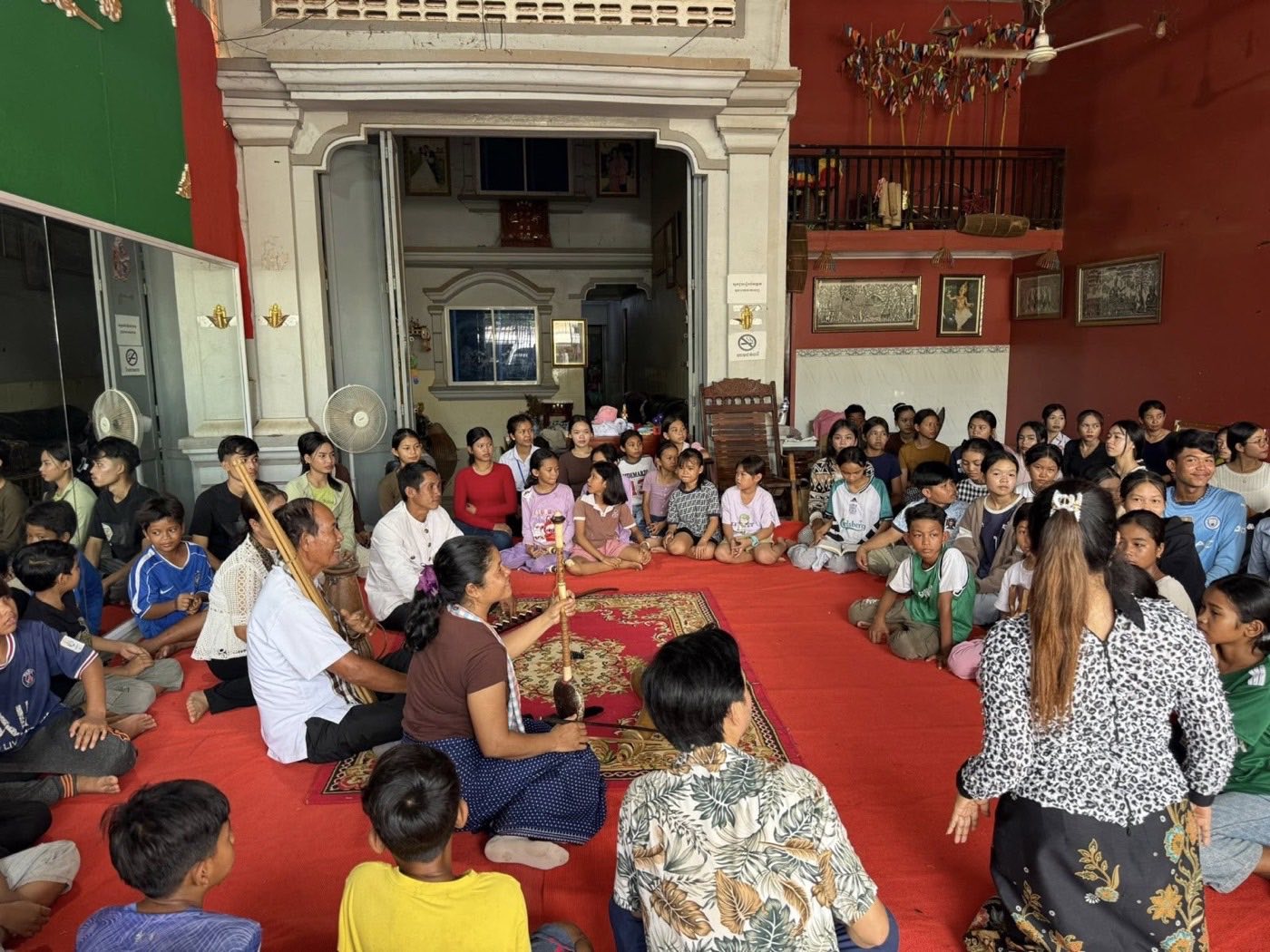
Stop 2
How it began
In 2013, a master musician named Mon Hai played the khene at the side of a road near a small village. The khene is a bamboo mouth organ: many notes at once, a sound with breath inside it. Nothing about the performance was planned. People came out to listen, and kept coming. Many of them were hearing their own music played live for the first time in decades. Some were hearing it for the first time in their lives.
The Khmer Magic Music Bus is that moment, made repeatable: if the music could do that at one roadside, it could do it anywhere a bus could reach. Arn Chorn-Pond and Thorn Seyma founded it together: Arn, the musician and activist, and Seyma, the singer who has run the program on Cambodian roads ever since. In May 2013, a crowdfunding campaign raised $36,000 in 35 days from 362 supporters in 19 countries. The bus was paid for by friends and strangers who thought the idea mattered.
That first bus carried musicians until 2018, when it wore out. The buses are rented now, trip by trip, and Seyma still assembles each journey herself: the musicians, the route, the schools, the schedule, and the backup plan.
And Mon Hai? Twelve years after the roadside performance that started everything, he was still riding along. When the bus pulled off the road at a small market on the way to Battambang, it was Mon Hai who stepped down with his khene.
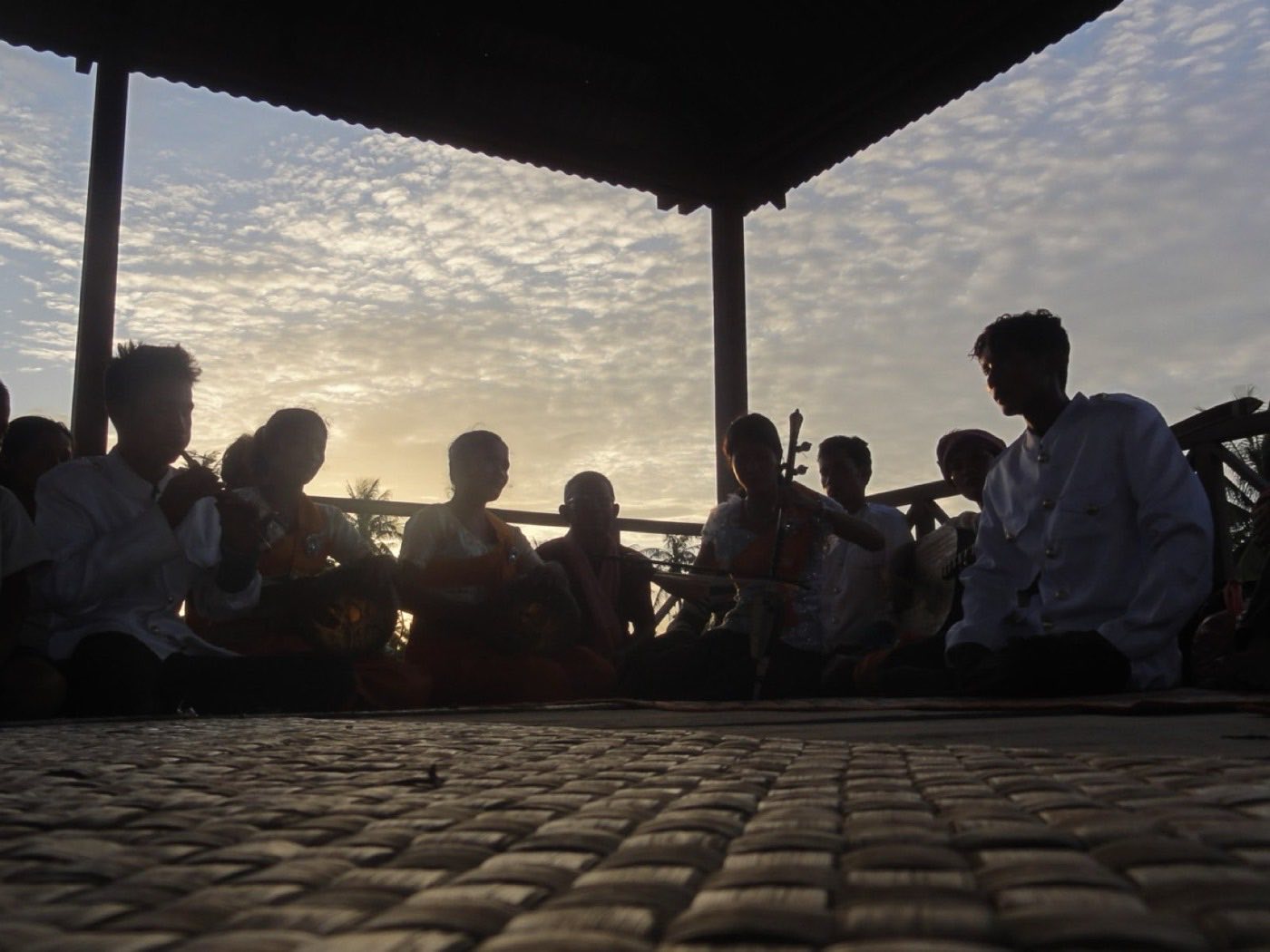
Stop 3
Why it matters
Between 1975 and 1979, the Khmer Rouge tried to remake Cambodia by force, and the country's artists were among its particular targets. Most of the master musicians who carried the old traditions did not survive those years. The music itself barely did.
Two companion resources tell that history in full: the Cambodia Timeline, and Music Saved My Life, the story of Arn Chorn-Pond, who survived the Khmer Rouge years as a child because he could play. Here is what that history sounds like on the ground: at a roadside stop on the trip, an old woman listened for a while, then told the musicians' guide she hadn't heard a sound like this since she was a child. Most of a lifetime, without the music she grew up with.
Recovery, in this program's model, is a rented bus full of Cambodian musicians pulling over where people live and playing for free. Some of them are masters; Mon Hai has been riding along since the first bus. Others are young, and often find themselves playing for village elders who knew these songs long before they did. When the bus stops, the old woman gets the sound of her childhood back, and the children beside her hear it for the first time. The music belongs to both of them. The bus just closes the distance.
Last stop
Ride along
Spend a day on the bus. It is a real trip, going from Siem Reap toward Battambang, stopping at a roadside market and a music school. You ride as an invited observer. Seven times during the day you'll make a choice: where to sit, where to stand, who to watch, what to ask. The choices change what you notice. Two riders who choose differently come back with different days to tell. There are no right answers, no score, and nothing to win.
The ride takes about 15–25 minutes. At the end, you'll leave with a record of your particular day: where you observed and what you asked.
Begin the ride → One day. Eight stops. What you see is up to you.